
Many artists can generate a good-looking shot. Most campaigns are forgotten quickly. Polish alone doesn’t hold attention, make people want to share what they’re watching, or help it go viral anymore. These films are usually tacked-on to the main still campaign shoots and feel like afterthoughts — mood pieces without much ambition or substance other than models walking through environments.
The ones that left a lasting impression were films like Cartier’s How Far Would You Go For Love? — in less than a minute, an emotional tour de force of a road trip spanning a couple’s whole relationship: the ups and downs, the enduring love and commitment to one another as they age through the decades, seamlessly. Or Louis Vuitton’s A Journey, which never once shows a bag and is still one of the most awarded pieces the house has ever made. It arrests you and is impossible to forget. Even films famous for their style — Purple Noon, the original The Thomas Crown Affair — endure because the style serves a story, not the other way around.
These aren’t mood reels. These pieces aim to build something beyond surface beauty that engages on a deeper level, through story, theme, and meaning. Ones that stay with you, the way the films I love have always been.
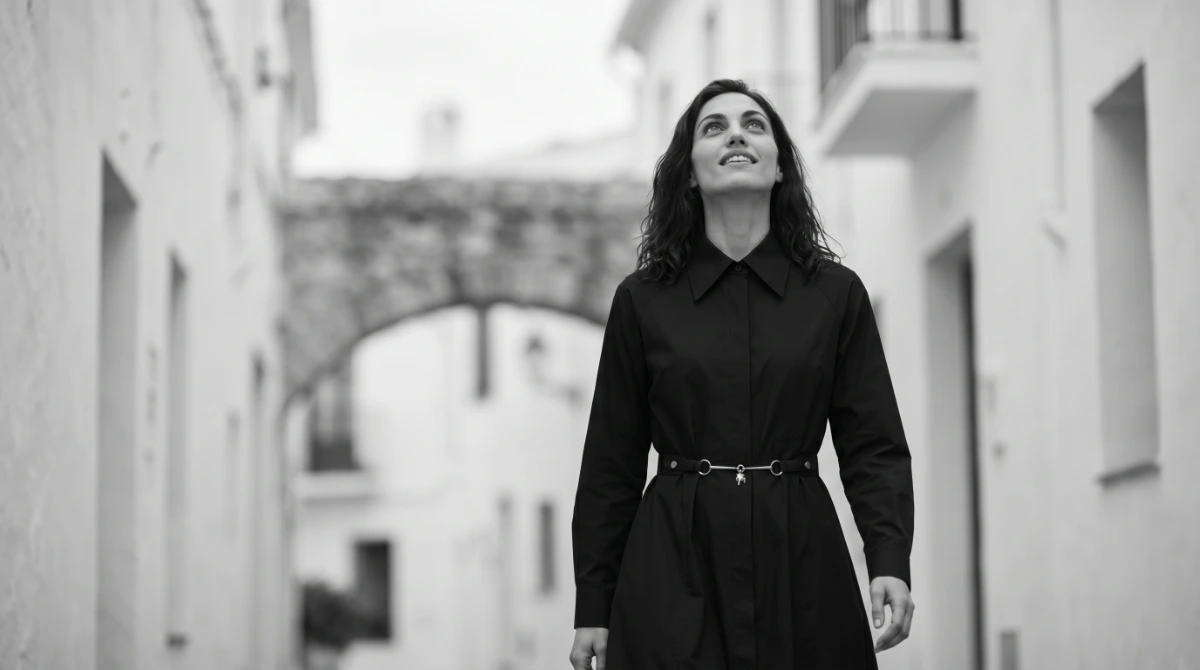
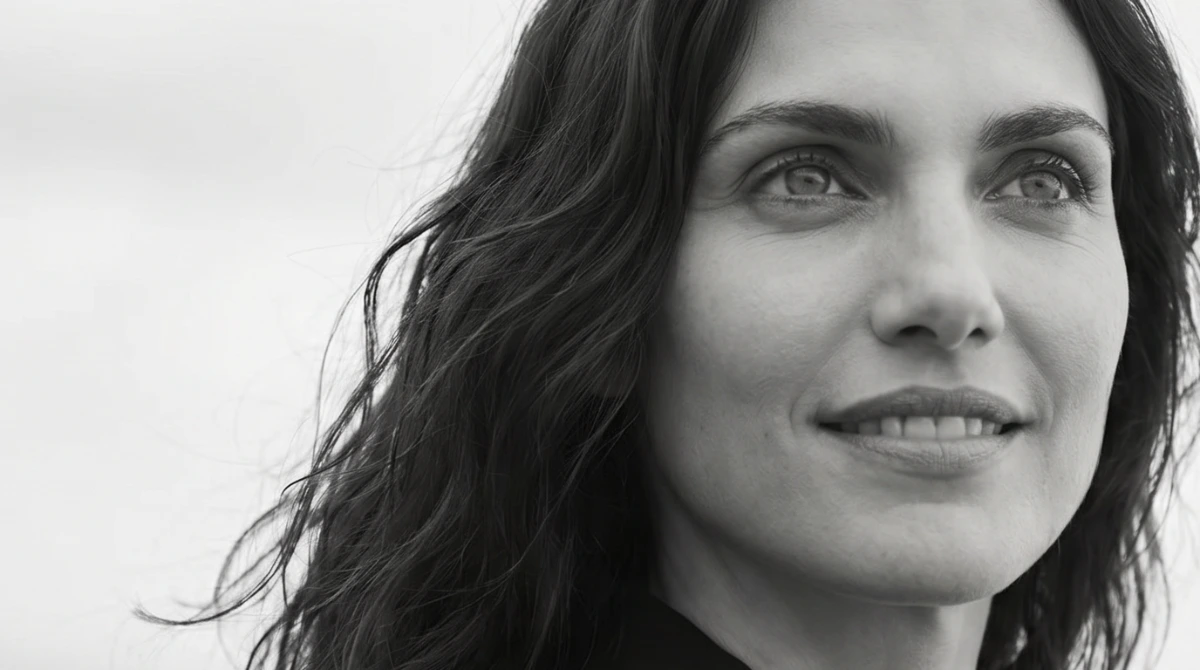
Sting once said all art is about surprise. That stuck with me, and it’s the whole idea behind this one. This piece sets out to capture that sense of childlike wonder, mystery, and excitement to see where things lead. A scarf from the house — long famous for them, light enough to float on the wind — appears overhead as she daydreams. She feels drawn to pursue it, caught up in the moment, trying to follow it through the village, keeping it in sight as it blows overhead.
Then she loses it — it’s gone. A gust behind her. She instinctively turns her head, and there it is, caught and fluttering on a statue behind her: a horse, tying into Hermès’s equestrian DNA. The scarf is caught on the statue’s bent leg. She gently reaches out and pulls it off. She looks up and smiles at the horse almost knowingly; it looks down at her.
And for one frame, barely long enough to be sure, the horse blinks back.
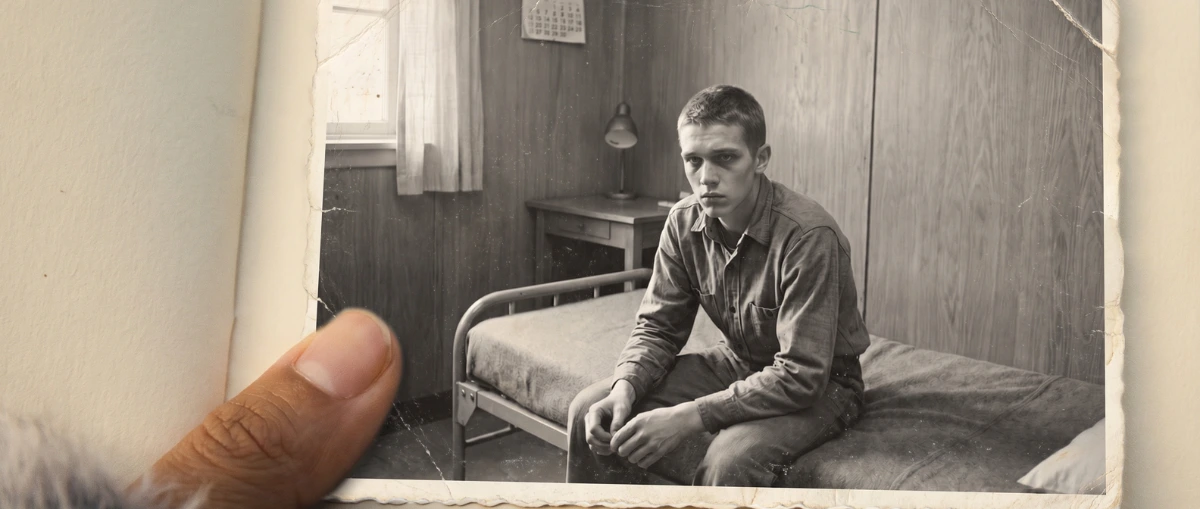
A modern homage to a real drive: Steve McQueen and his first wife, Neile, taking the Ferrari she bought him as a gift up the California coast from their home in Brentwood. Everyone remembers McQueen for his cool. Fewer remember Neile — the one who saw the boy nobody came for. Abandoned by his parents, left at the Boys’ Home, a troubled youth demoted from the Marines — he came from nothing. She saw something in him before anyone else did, before the fame, before the version of himself the world would come to celebrate as an enduring icon.
Speed was the one place he felt truly relaxed, away from all the distrust and manipulation in Hollywood. Speed demands presence.
You must stay relaxed because if any trouble comes up you don’t want to be tense — you want to stay relaxed so that you can cope with it.
Her handwriting carries the story: journal fragments instead of narration, because a private note does more work than an explanation ever could. “A boy alone at Christmas.” “A shell built to look like confidence.” You don’t need more than that to understand where he started.
The drive runs north up to Carmel, but she was always his North — the fixed point he kept finding his way back to in life. The film closes on a real photograph of the two of them, because as improbable as it sounds, it all happened. This is a tribute to her.
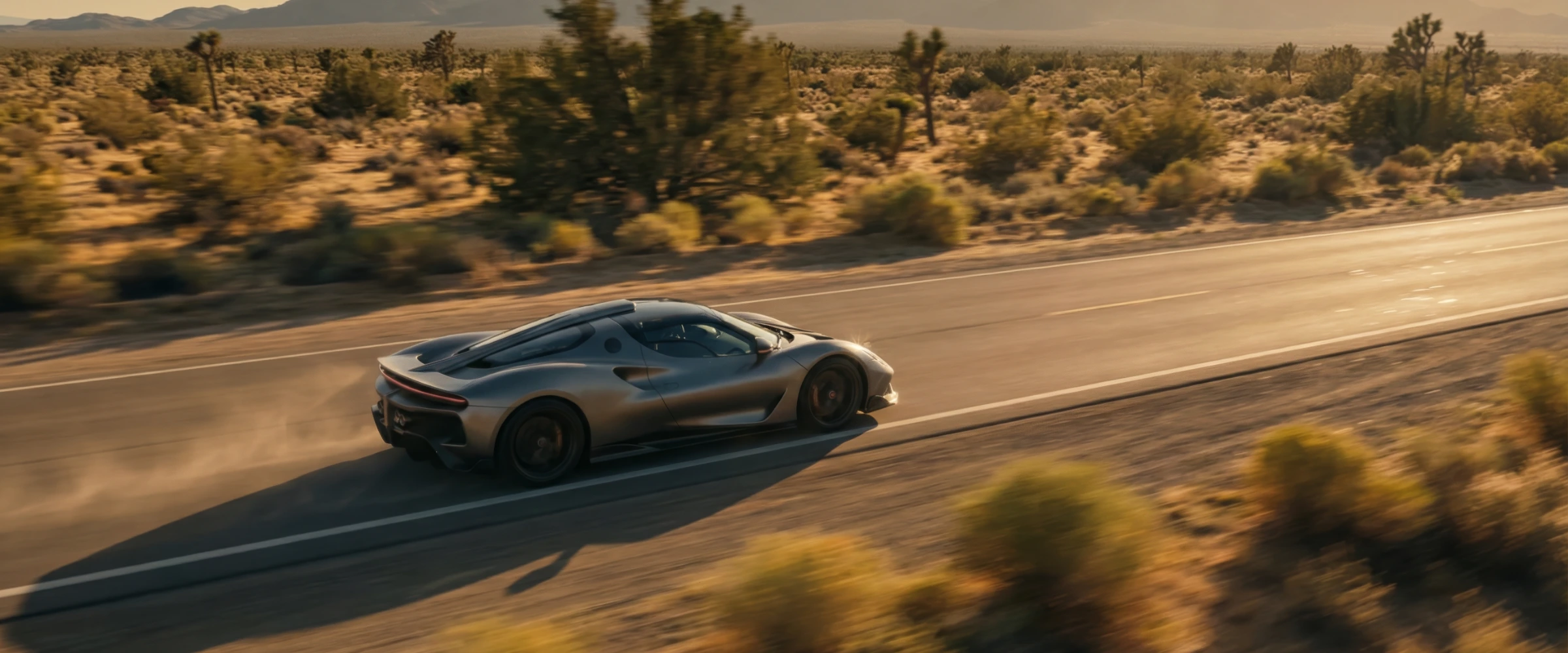
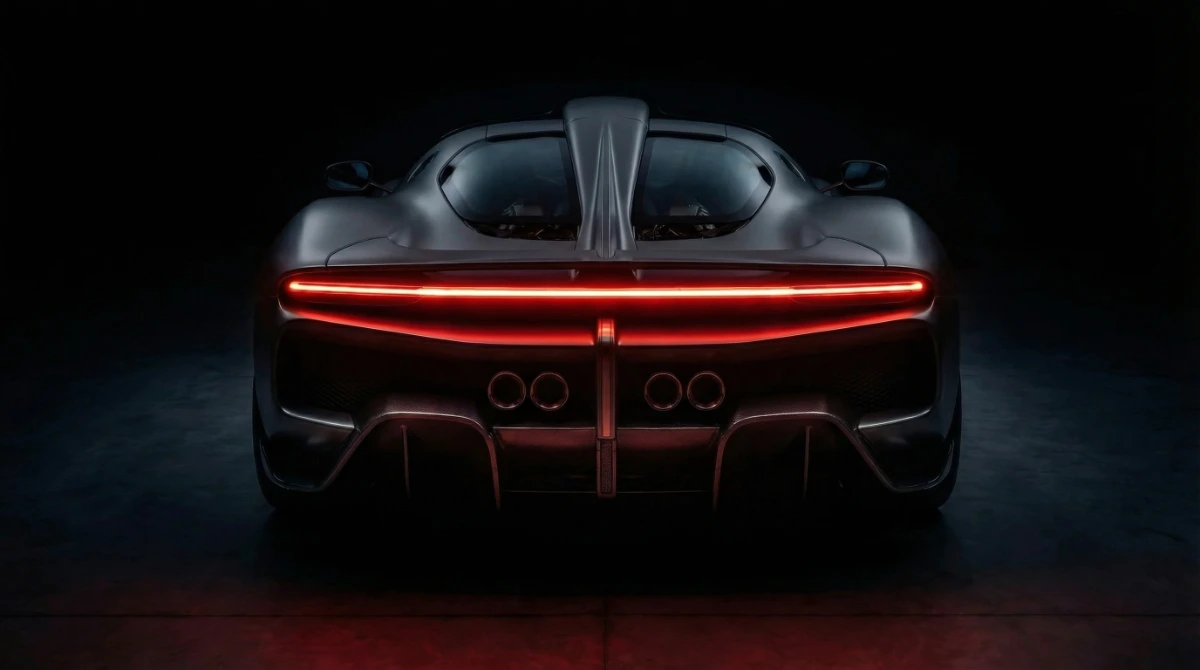
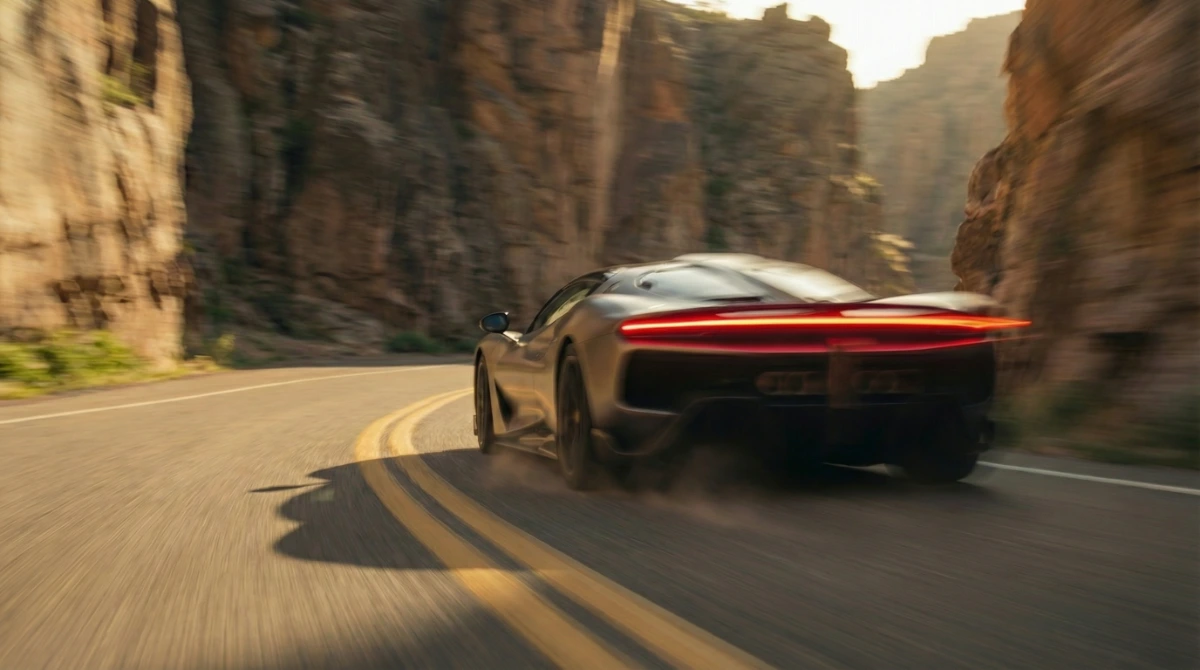
In my bedroom as a kid, I used to draw exotic cars under posters on the wall. In between, I got the real version: mentored by Bob Bondurant, time in formula and purpose-built racing cars at tracks like Laguna Seca and Road Atlanta. It’s why I can’t watch most movie car chases without noticing the lack of realism.
Proof of concept arrived the moment I created a technique from the original Mad Max, hiding an edit inside a motion blur, and it worked.
I wanted to find out if these tools could let me build a car that never existed: the design, the branding, the identity. The real test wasn’t just the car — it was capturing real speed. That’s when I knew the whole thing would come together. What follows is a studio reveal that turns from composure to something closer to danger, an engine catching like a held threat finally let loose, then the desert, climbing up to the mountains. Born From Flight (AVIO in Italian) isn’t just a tagline — it’s what happens when you will something into being from your imagination.
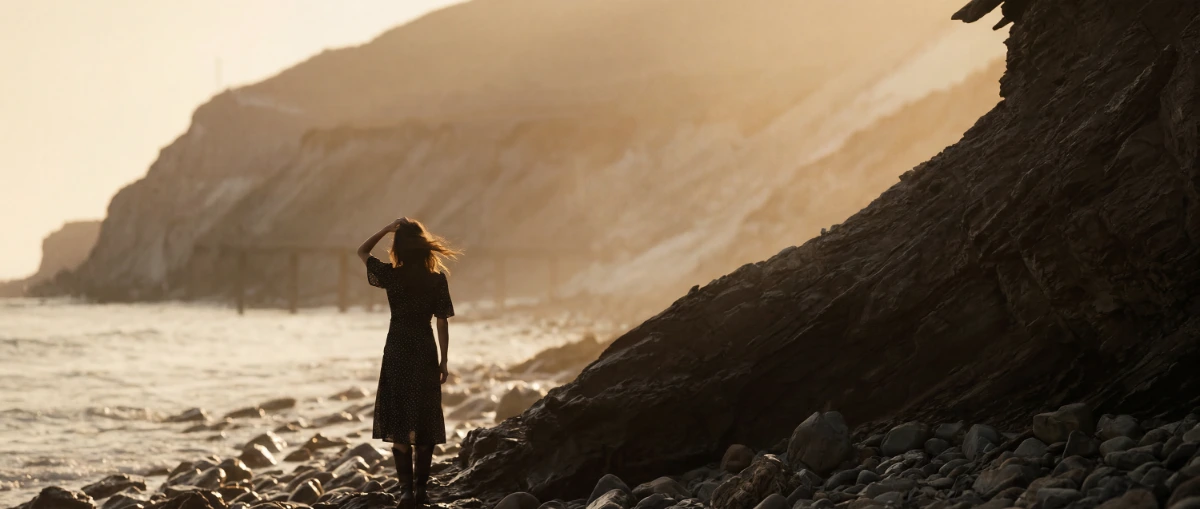
Built around a feeling I found twice in Italy: a culture that doesn’t seem to multitask. No one there is checking a phone mid-conversation. People greet each other warmly, sit through long meals, talk with friends and family without rushing anywhere. They dress with real intention, care about art, design, and architecture as a matter of course, not as an indulgence. Upon returning to LA, it made me wonder whether we’ve traded away the things that actually make life feel substantial for a version of productivity that leaves us feeling empty.
That question became the film. The concept is simple: a woman leaves the noise behind, takes an old pickup truck to a cabin off the grid in Big Sur with her dog, Jasper, and gets back to pleasures small enough that we usually blow right past them. I wanted the film to sit inside her interior life, not just show a montage of “unplugging” as an aesthetic. Morning coffee, made slowly because there’s finally nowhere else to be. A mandarin peeled instead of eaten in three bites over a laptop. Walking the shoreline. Watching waves. Reading. Long baths. Nights by the fire, looking at the stars because there’s nothing else competing for her attention. It’s the texture of a life that isn’t constantly reaching for the next dopamine hit.
Arden is a brand name I invented for this. It exists to show what storytelling like this could do for a brand that actually stands for this kind of presence, this kind of return to what matters. It ends on a line I mean literally, not as a metaphor.
She didn’t find herself. She simply stopped losing herself.
No twelve-page proposal, no six-week pre-production. Send a brief and a reference — the groundwork gets built once, and everything after moves faster. Whether that’s a single campaign or an ongoing partner across every property and every channel, the starting point is the same.
Explore a Project