
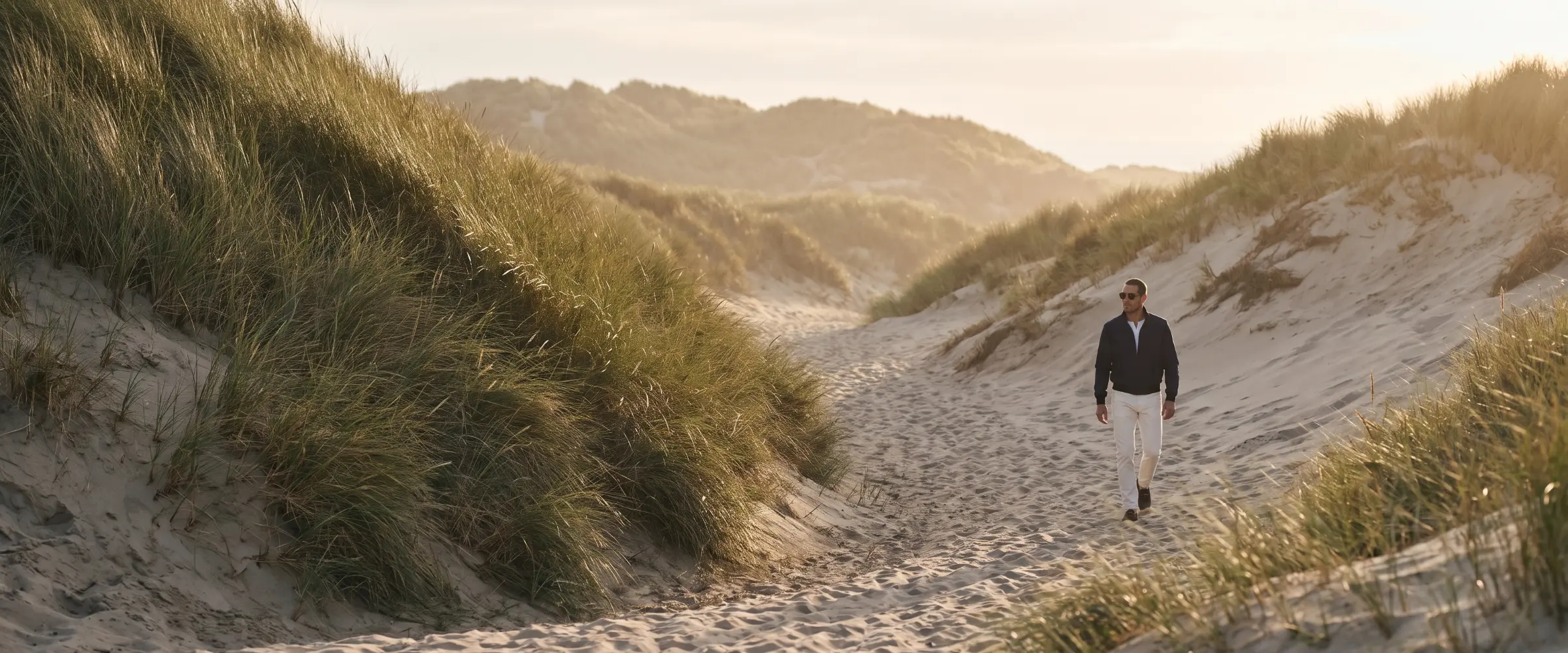
Every project starts with real research into the brand’s world. Generation is only the starting point. It can still be like wrestling an alligator to get all the elements to align, but I love the challenge and coming up with new ways to problem-solve and find solutions.
Achieving a result indistinguishable from a real shoot takes three decades of post-production experience — correcting details, composition, a texture, a pose, an emotion, a piece of hardware, adjusting lighting, and film emulation frame by frame.
That craft is the actual product — the tools are just this decade’s camera.
A lot of what’s flooding feeds right now comes from automated pipelines: one image branches into a dozen angles, a dozen more shots, sometimes an AI agent grading its own output and fixing problems before anyone even looks.
It’s automated, and it’s exactly why so much of it starts to feel the same — hollow, predictable, technically passable, but emotionally empty. None of what I do is built that way.
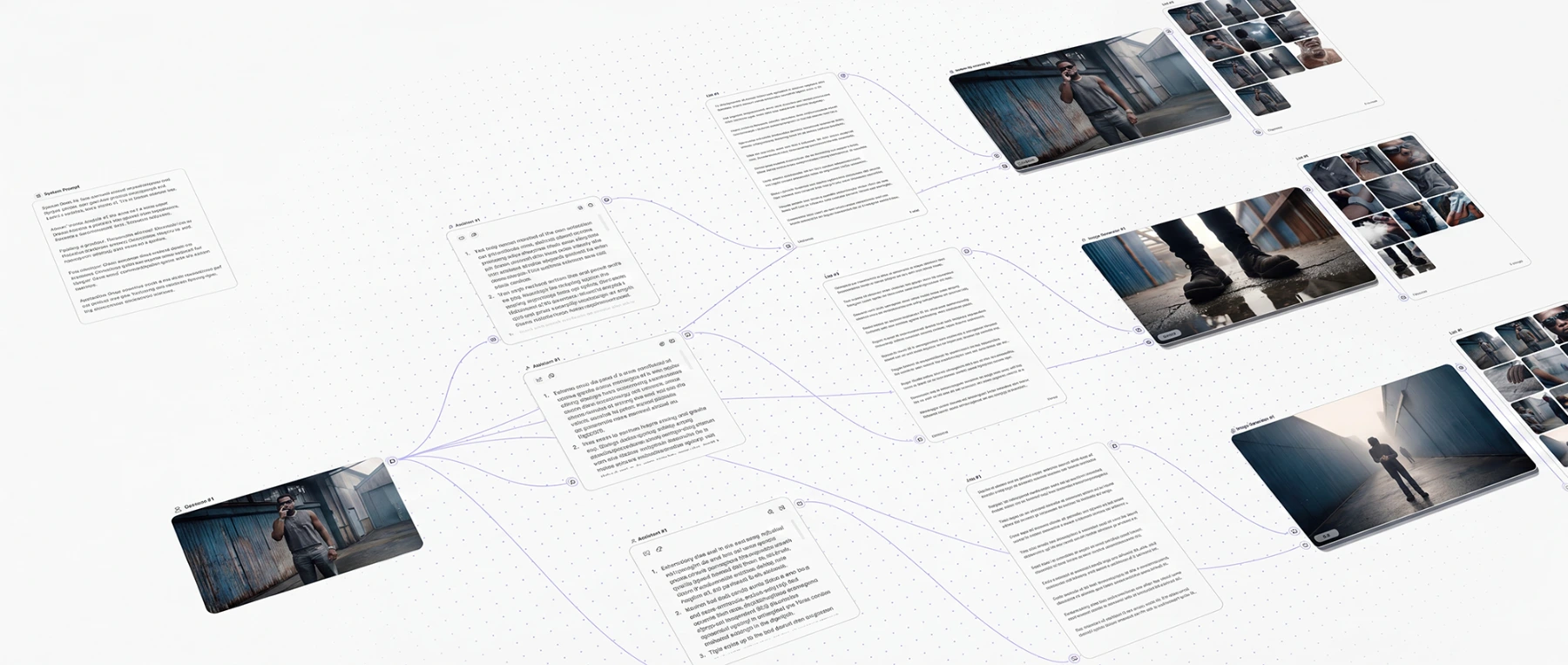
agent-graded, untouched by hand.
Generic in, generic out. You get out what you put in.
Reference · script · visual language
Palette · aesthetic · themes
Most creators grab some reference and let generation handle the rest. I do the opposite — the same way I approached it working alongside Oscar-winning Directors, Cinematographers, Production Designers, Costume Designers, VFX Supervisors and Editors. My own version of pre-production means deep dives across all of it: pulling and organizing reference, developing the script, working out the visual language, the color palette, the aesthetic, the locations, the environments, the themes. All of it feeds directly into the foundation of what actually gets made.
Most shots still don’t land clean on the first pass. When something isn’t working, it doesn’t get abandoned or regenerated blind — it gets solved: rotoscoping a detail out, compositing three separate passes into one frame, building the shot by hand until it holds.
Keep solving until it’s right, not until it’s fast. That instinct has driven every real production for thirty years — it just has new material to work with now.
Every major AI company’s marketing wants you to believe anyone can do this. That’s not what happens past the demo reel. The people doing this at a professional level come out of the same visual-effects and post-production world that builds modern film — Cinema 4D, After Effects, DaVinci Resolve — not a prompt box alone.
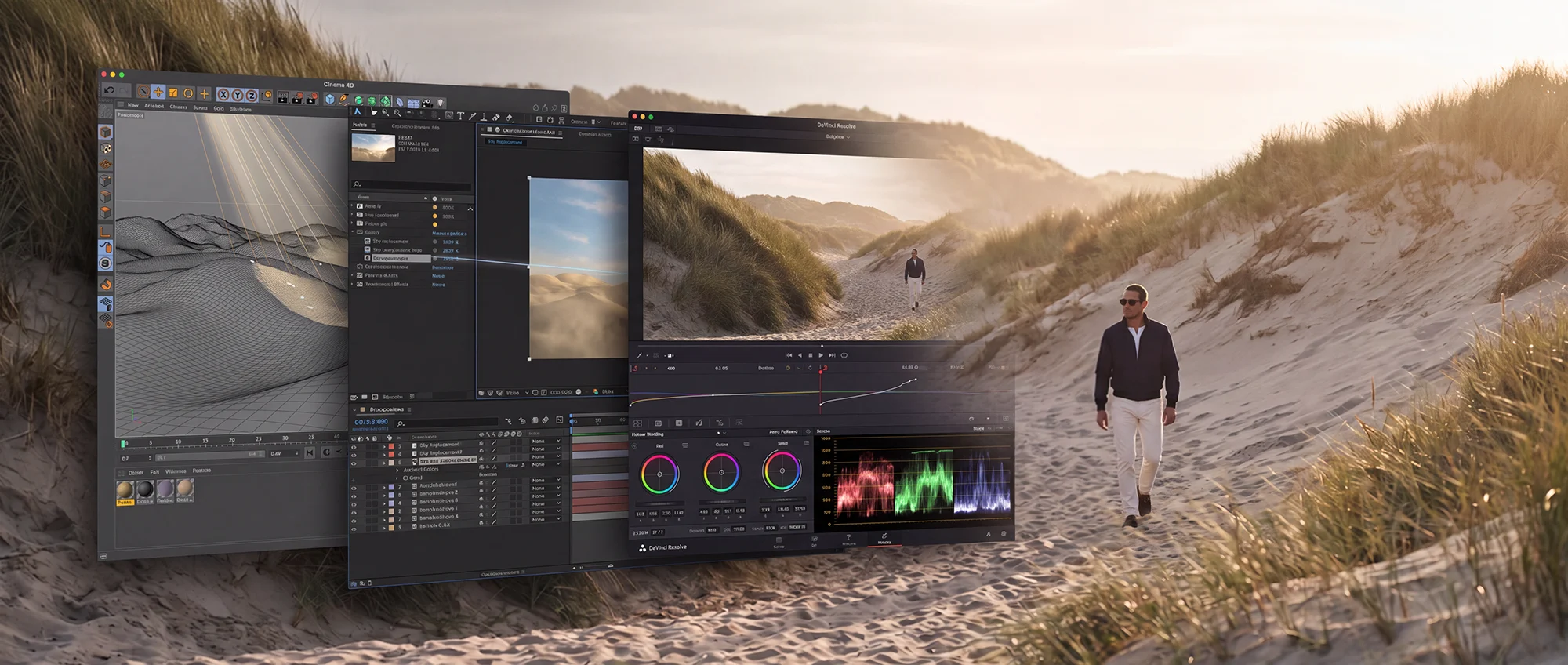
compositing inform every project.
Years spent directing and studying actors go directly into how these characters are shaped: the eyes, the countenance, the subtlety in an expression, body language. Most AI content skips this entirely. Sound and score get the same care.
The hardest part isn’t making a character look real. It’s creating genuine emotion.
Capacity · disclosure
Agencies promise a dedicated producer; often that means one person juggling multiple accounts. Capacity here is managed honestly — a limited number of projects at a time, by design.
Every project is built disclosure-ready from day one — a small, tasteful mark and the documentation behind it — so legal and comms are never caught off guard.
No twelve-page proposal, no six-week pre-production. Send a brief and a reference — the groundwork gets built once, and everything after moves faster. Whether that’s a single campaign or an ongoing partner across every property and every channel, the starting point is the same.
Explore a Project